Press release —
The exhibition To the Sea! opens at Nationalmuseum on 24 September
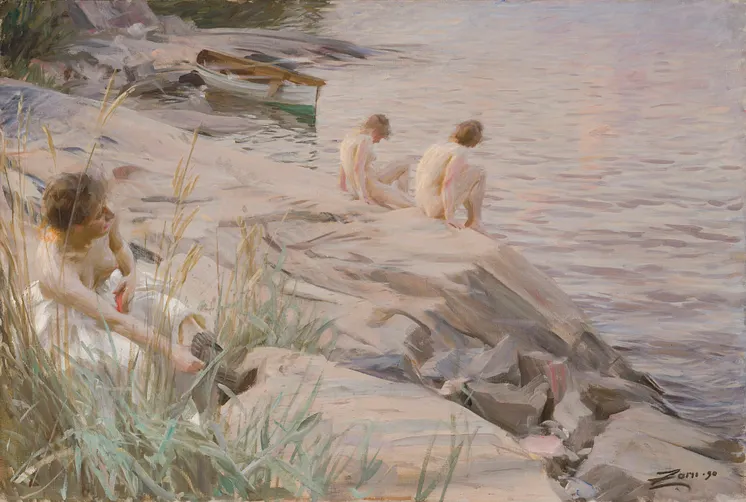
How did the beach become a place for holidays, recreation, and pleasure? This autumn, Nationalmuseum presents an exhibition exploring the rise of coastal and seaside tourism from 1870 to the mid-20th century and how it has been depicted in art. Experience a day at the beach through more than 200 paintings, photographs, advertising posters, and examples of historical swimwear by artists such as Claude Monet, Anders Zorn, Peder Severin Krøyer, Sigrid Hjertén, Georgia O’Keeffe, Robert Capa, and many others.
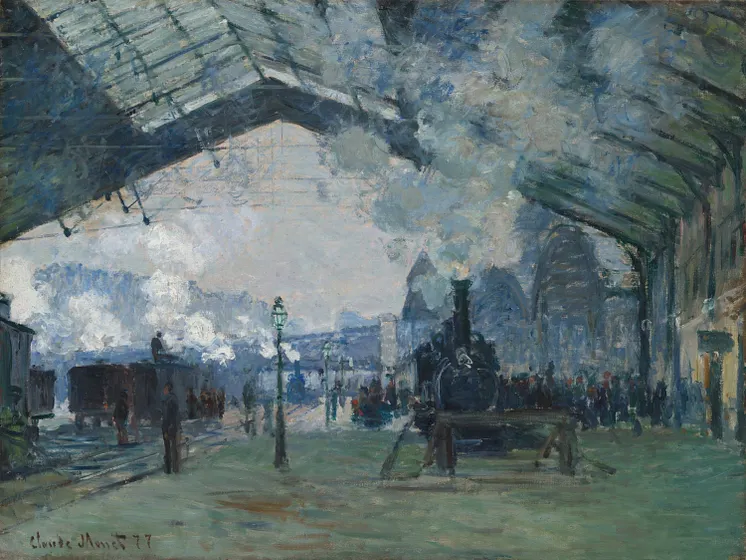
In the late 19th century, seaside resorts began to spring up along the coasts. It became popular to swim in the sea, spend time on the beaches and stay in the new hotels. The seaside resorts also attracted artists, and Impressionists such as Claude Monet depicted the coastal landscape and life there. In France, Normandy was a region where seaside tourism grew rapidly. The new railway lines also made the beaches along the coast easily accessible. Several of the artists represented in the exhibition captured modern life and the gradual democratization of the beach as a holiday destination.
A similar development took place in Skagen, Denmark. An artists’ colony was formed here in the 1880s, and soon the long sandy beaches became popular bathing spots. The Skagen painters depicted both seaside life and traditional life in the fishing community. In their paintings, we often encounter the artists themselves, at work or strolling along the beaches in the twilight. Life in the fishing community was hard and fraught with risk and stood in sharp contrast to the holiday life of the seaside visitors. The encounter between modern seaside culture and the living conditions of the local population is a recurring theme in the exhibition. The paintings of the Skagen artists have played a major role in making Skagen the tourist destination it is today.
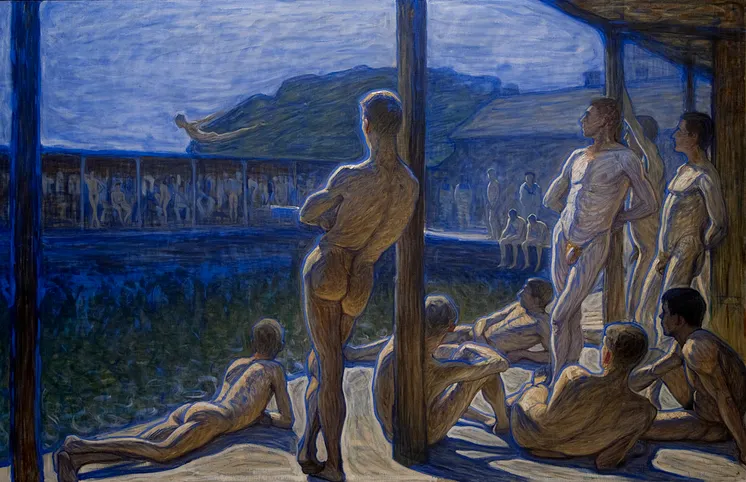
During the first decade of the 20th century, there was a growing interest in depicting the naked male body in art. The sports movement was emerging, and the strong, well-trained man became an ideal. It was also considered beneficial and invigorating to bathe in the sea. In large-scale paintings, artists such as J.A.G. Acke, Eugène Jansson and Edvard Munch depicted naked men bathing in deep blue water and bright sunlight.
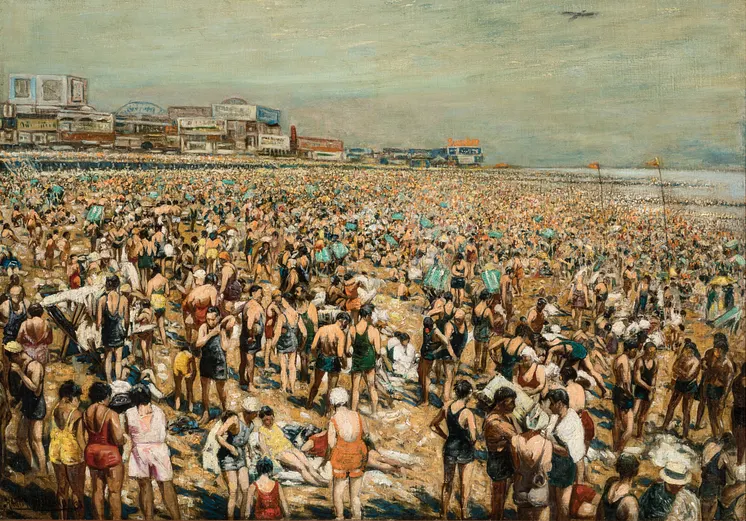
The final section of the exhibition shows how the interest in seaside life and beaches continued in art during the first half of the 20th century. American painters depicted overcrowded beaches off New York, whilst artists on the Swedish west coast transformed scenes from bathing beaches into colourful images of energy and joie de vivre. For the Surrealists, the beach could be interpreted as something more than a boundary between sea and land. The beach became a transition between wakefulness and dreams, between the conscious and the unconscious. The exhibition ends where it began: on the beaches of Normandy. After the war, the landing beaches along the coast became a very different kind of destination than before, and today they are sites of global tourism.
The exhibition comprises around 200 works – paintings, photographs, advertising posters and more. In addition to the museum’s own rich collections, exceptional loans are on display from museums such as The Metropolitan Museum of Art in New York, the Musée d’Orsay in Paris and The National Gallery in London.
The exhibition is a part of Riksbankens Jubileumsfond’s research-facilitating project RJ Art and Culture, with the aim to make the humanities and social sciences more accessible to a broader public.
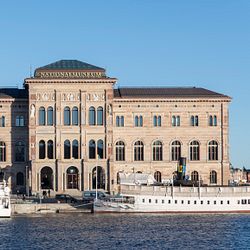
The exhibition To the Sea! The beach as borderland and summer dream will be on display on the upper floor of Nationalmuseum from 24 September 2026 to 7 February 2027.
Exhibition curators: Per Hedström, Martin Olin, Carl-Johan Olsson, Carina Rech, Nationalmuseum
Exhibition designer: Joakim Ericson Werning, Nationalmuseum
For press information
Hanna Tottmar, Head of Press, press@nationalmuseum.se, +46 8 5195 4400
Topics
Categories
Nationalmuseum is Sweden’s museum of art and design. The collections comprise some 700,000 objects, including paintings, sculpture, drawings and graphic art from the 16th century up to the beginning of the 20th century and the collection of applied art and design up to the present day. Nationalmuseum is a government authority with a mandate to preserve cultural heritage and promote art, interest in art and knowledge of art.